

Middle East Flight Disruptions: Complete 2026 Travel Guide
Global air travel is experiencing significant operational changes as Middle East flight disruptions continue to affect international airline schedules in 2026. Thousands of daily flights passing through the Gulf region now face rerouting, extended travel times, and operational delays, impacting passengers on a global scale. Airlines, government authorities, and airport management teams are actively coordinating measures to ensure both passenger safety and uninterrupted connectivity across continents.
The Middle East is one of the world’s busiest aviation hubs, linking Europe, Asia, Africa, and Oceania. Travelers whose final destinations lie outside the region can still be affected due to rerouted flights or extended layovers. Recent online search trends show growing public interest in terms like “Middle East flight disruptions,” “international flight delays,” and “airline schedule updates,” indicating heightened concern among frequent flyers, business travelers, and tourists.
Understanding the latest updates and planning accordingly can help travelers avoid complications and ensure smoother journeys. Many travelers are now proactively adjusting travel itineraries, keeping flexible ticket options, and tracking airline apps to stay informed in real-time.
Reasons Behind Middle East Flight Disruptions
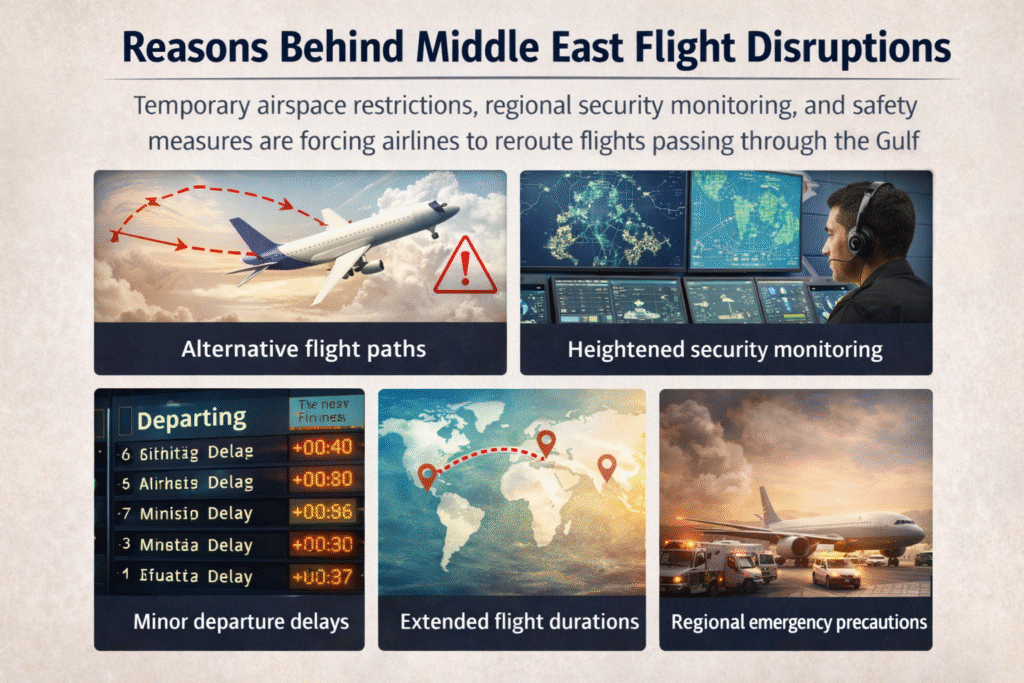
The current surge in Middle East flight disruptions is caused by a combination of temporary airspace restrictions, regional security monitoring, and precautionary safety protocols implemented by airlines and civil aviation authorities. These measures are designed to protect passengers and crew, minimizing risk during times of geopolitical tension, unusual weather patterns, or regional emergencies.
Instead of outright canceling flights, airlines often reroute aircraft along alternative corridors. While these measures enhance safety, they also result in longer flight times and adjustments to connecting flights, which can impact international passengers’ schedules and plans. Airlines must also ensure that flight paths meet international regulations, which sometimes adds complexity to route planning.
Passengers may notice:
- Increased flight durations, sometimes adding several hours
- Minor departure delays at origin airports
- Adjusted layover and connection timings
- Modifications to in-flight services or route plans
Such precautionary steps ensure compliance with international aviation standards while safeguarding all travelers. Experienced flyers are encouraged to check airline notifications frequently and plan extra time for connections to avoid missing critical flights.
Official Government Travel Advisory
Travelers are strongly advised to monitor airline updates and official government announcements during periods of Middle East flight disruptions. Government advisories provide critical information on flight safety, airspace closures, and recommended travel practices, allowing passengers to plan with confidence.
👉 Official U.S. Department of State Advisory.
Passengers are encouraged to check these updates regularly before departing, particularly when flights transit through major Gulf hubs. Enrollment in travel alert notifications can further improve awareness and preparedness, helping travelers avoid unexpected disruptions. Travelers can also consult airline customer support for real-time guidance and tips on alternate routes if their flights are affected.
How Airlines Are Managing Middle East Flight Disruptions
Airlines are responding proactively to Middle East flight disruptions by implementing advanced operational strategies. Utilizing modern navigation technologies, airlines can design alternative routes without halting flights, minimizing passenger inconvenience while maintaining safety. Airlines also coordinate closely with regional air traffic control authorities to ensure that rerouting meets safety standards.
Key airline strategies include:
- Alternative routing to bypass restricted or congested airspace
- Adjusted departure and arrival schedules to accommodate rerouted flights
- Flexible passenger rebooking options, including refund and ticket change policies
- Enhanced fuel planning to ensure safety on longer routes
- Additional crew scheduling adjustments to comply with international rest regulations
In addition, airlines communicate schedule changes promptly via apps, emails, and airport announcements, allowing passengers to make informed decisions before traveling. Many carriers also provide options to upgrade seats, extend layovers safely, or adjust travel plans without additional fees to reduce stress for affected passengers.
Passenger Experience During Flight Disruptions
The impact of Middle East flight disruptions is felt worldwide, affecting passengers traveling for both business and leisure. Travelers may encounter:
Longer Flight Times
Rerouted flights may extend travel by one to three hours, depending on the route and number of layovers. Passengers should anticipate delays when planning connecting flights and be prepared for minor inconvenience in meals or airport transfers.
Connection Challenges
Short layovers may become less predictable due to route adjustments, making it important for travelers to allow extra buffer time between flights. Airlines often provide automated alerts and rebooking options to help mitigate these challenges.
Fare Variations
Longer flight paths and operational changes may slightly influence airfare, reflecting additional fuel consumption and logistical adjustments. Passengers should check with airlines regarding fare adjustments and eligibility for travel compensation or meal vouchers.
Communication Enhancements
Airlines provide real-time updates through mobile apps, SMS alerts, and airport information boards, helping travelers stay informed and adjust plans if necessary. Customer service desks are increasingly staffed with multilingual personnel to support international passengers during peak disruption periods.
Global Aviation Network Effects
Because the Middle East serves as a critical hub connecting Europe, Asia, and Africa, Middle East flight disruptions have cascading effects across global aviation networks. Airlines adjust schedules, cargo operations may slow, and travel plans for international tourists and business professionals are influenced.
Notable effects include:
- Revised airline timetables and global route adjustments
- Increased fuel consumption and associated operational costs
- Slight delays in cargo and logistics movements
- Changes to international tourism and business travel plans
Despite these challenges, the overall demand for international air travel remains strong, indicating that passenger confidence in airline safety protocols continues to recover post-pandemic. Airlines are also exploring digital tracking systems to improve predictability and minimize disruption impacts globally.
Travel Tips During Middle East Flight Disruptions
Travelers can minimize inconvenience during periods of Middle East flight disruptions by taking proactive steps. Recommendations include:
- Checking flight status 48–72 hours before departure
- Opting for flexible or refundable tickets
- Allowing extra time for layovers and connections
- Purchasing travel insurance covering delays and rerouted flights
- Monitoring official government travel advisories regularly
- Keeping essential documents, medications, and personal items in carry-on luggage to avoid baggage issues
Proper planning ensures a smoother journey and reduces stress, even in the face of unexpected schedule changes. Travelers are also advised to maintain digital copies of flight tickets, passport pages, and emergency contacts.
Airline and Airport Support Initiatives
Airports and tourism authorities are actively improving passenger support systems to handle Middle East flight disruptions. Measures include:
- Real-time updates on departure and arrival boards
- Automated rebooking tools for delayed or rerouted flights
- Faster and more efficient customer service at help desks
- Enhanced baggage handling and transfer coordination
- Dedicated lounges for passengers with extended layovers
These initiatives demonstrate the aviation industry’s capacity to maintain operational stability and passenger confidence, even during periods of regional airspace disruption. Travelers are encouraged to leverage these services to ensure comfort and timely connections.
Future Outlook for Global Travel
Experts predict that Middle East flight disruptions may continue temporarily, depending on regional conditions. However, technological innovations and international coordination are helping airlines minimize passenger inconvenience while maintaining safety.
Air travel demand is expected to remain strong, with trends indicating a gradual return to pre-disruption levels. Investments in smart route planning, digital communication tools, and enhanced customer experience initiatives are helping stabilize travel operations and maintain passenger confidence globally.
Additionally, governments and airlines are investing in predictive modeling and real-time tracking technologies to anticipate airspace restrictions, further reducing the likelihood of extended flight disruptions.
FAQs — Middle East Flight Disruptions
Are flights being canceled completely?
Most airlines reroute flights instead of canceling them, ensuring continuity for passengers.
Is international travel safe?
Yes. Airlines operate under strict global safety standards, prioritizing passenger and crew security.
Which travelers are most affected?
Passengers traveling between Europe, Asia, and Africa via Gulf region hubs experience the most impact.
Should travelers postpone trips?
No. Monitoring updates and planning flexible itineraries is sufficient to navigate disruptions.
Where can travelers check official updates?
Government advisory websites provide the most reliable guidance.
Conclusion
The ongoing Middle East flight disruptions highlight the interconnected nature of modern global aviation. Temporary rerouting and schedule adjustments may cause minor inconvenience, but airlines and authorities continue to prioritize safety, efficiency, and passenger communication.
For travelers, preparation is key. Regularly monitoring official advisories, confirming flight updates, and allowing extra time for layovers ensures smoother journeys, even amid dynamic conditions. Planning ahead, maintaining flexible itineraries, and using airline support services can turn potentially stressful experiences into manageable travel adjustments.
As aviation technology and international coordination improve, disruptions are expected to stabilize, supporting reliable global travel and sustained tourism growth throughout 2026.
For official updates and guidance, always consult the government advisory portal.
For more visa and immigration updates and detailed travel guidance, click here.